I Spent $500 on Fake Currency. Here's My Lesson.
Hook & Problem Framing
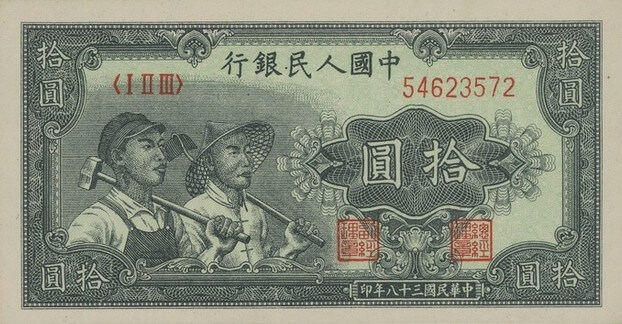
April 2019. Baltimore coin show, third-floor dealer tables. I'm holding a 1949 People's Republic of China 10 Yuan note in a protective sleeve. Pick 816 — first series PRC currency, historically significant, AU+ condition. The dealer quotes $500. I don't hesitate.
Here's what I didn't know: I was holding a forgery.
Not a rough fake. Not an obvious reproduction. A sophisticated counterfeit that fooled me completely because I trusted surface-level checks and assumed a major show meant guaranteed authenticity. That $500 taught me more about paper money collecting than any book ever could — and it almost killed my credibility before I even started.
By the end of this, you'll know the exact red flags I missed, the forensic checks I should have run, and the pre-purchase protocol that separates collectors from expensive hobbyists.
The Note That Fooled Me (Pick 816 Breakdown)
The 1949 First Series PRC 10 Yuan isn't just currency — it's an artifact of revolution. Issued months after Mao's victory, it marked the economic consolidation of the People's Republic. For collectors, it's foundational: the first money of a superpower, printed during chaos, surviving decades of political upheaval.
The note I bought looked flawless under casual inspection. Clean margins, vibrant red and green ink, sharp borders, minimal handling wear. AU+ seemed conservative — it could have passed for uncirculated if you didn't look too close. The dealer's pitch was simple: "Great example, hard to find in this grade." He wasn't wrong about scarcity. Early PRC issues in high grade are legitimately rare, especially outside China.
I ran my standard checks. Centering looked good — margins were even on all sides, no major shifts. Color saturation was strong, no fading or water damage. Edges showed minimal wear, no tears or creases. The paper felt right — not glossy, not too stiff. I held it up to the light, saw no obvious repairs or alterations.
What I thought I was doing: due diligence. What I was actually doing: confirming my bias. I wanted the note to be real, so I looked for reasons to believe it, not reasons to doubt it.
Here's what I didn't check: print method. Serial number application. Paper texture under magnification. Comparison to certified examples. Any of the forensic fundamentals that would have exposed the forgery in under two minutes.
The false confidence came from experience — or what I thought was experience. I'd handled a few notes before, learned basic grading terminology, could spot obvious problems like tears or stains. That shallow knowledge base made me dangerous. I knew enough to feel competent, but not enough to recognize my blind spots.
I paid cash, got a handwritten receipt, and walked out feeling like I'd scored a deal. The note went into a sleeve, then into a storage box, then onto my submission list for PCGS Banknote grading. I was already planning where it would sit in my collection, already imagining the grade reveal.
Never once did I question the fundamentals. Never once did I think: what if this isn't real?
That assumption cost me everything.
The Body Bag Moment (PCGS Rejection Breakdown)
Three weeks later, the package arrived. I knew immediately something was wrong — the return envelope was too thin, too light. No slab. No grade. Just a sealed holder with a label I'd never seen before.
Two words. $500 gone. My credibility as a collector — gone. The shame wasn't just financial. It was realizing I'd been so confident, so careless, so eager to believe I'd found a deal that I skipped every verification step that mattered.
PCGS doesn't body bag notes lightly. Their authentication team includes forensic specialists who've examined millions of pieces of currency. When they reject a submission, they document why — and my rejection report was brutal.
Print method: authentic Pick 816 uses intaglio printing. Raised ink, tactile ridges, depth you can feel with your fingertip. Mine was lithographic — flat, smooth, no texture. Intaglio creates pressure, embosses the paper slightly, leaves microscopic plate lines. Lithography doesn't. It's a fundamentally different process, and I never checked.
Serial number application: genuine notes use letterpress. Each character is individually impressed, creating slight depth variation, micro-alignment differences, visible pressure marks under magnification. Mine was litho-printed — perfectly flat, perfectly uniform, perfectly wrong. The consistency was the giveaway. Real letterpress has human variance. Fake litho has machine precision.
No watermark verification: most of Pick 816 doesn't have watermarks, but I should have checked paper composition anyway. Authentic currency paper has embedded fibers, specific weight, distinct feel. I assumed dealer reputation was enough verification. I was wrong.
After the rejection, I pulled out my 10x loupe and UV light — tools I should have used before purchase. Under magnification, the flatness was obvious. I ran my finger across the serial numbers and felt nothing. No impression, no depth, no texture. The ink sat on top of the paper like a photograph, not embedded like currency.
The UV light revealed commercial paper stock — slight brighteners, wrong fluorescence pattern. Authentic notes glow differently under UV because the paper chemistry is different. I'd never thought to check because I trusted the context: major show, established dealer, reasonable price for the grade.
That trust was my failure. Authentication isn't about trusting sources. It's about verifying claims, testing assumptions, and accepting that even reputable dealers can sell fakes — intentionally or not.
The emotional weight of that body bag wasn't just losing money. It was realizing I'd been a mark, not a collector. I'd bought confidence instead of competence, and the market punished me for it.
That failure became my education. Every note I've purchased since follows a protocol I developed in the aftermath of that rejection — a system that takes two minutes and has never failed me.
The Red Flags You Can't Ignore (Practical Checklist)
-
Print method verification — non-negotiable. Run your fingertip across inked areas — genuine intaglio has texture, resistance, tactile depth. You should feel ridges, especially on denomination numbers and intricate design elements. Use a 10x loupe to check for ink pooling, plate lines, micro-relief. Intaglio ink sits in grooves carved into metal plates, creating dimensional variation lithography can't replicate. Lithographic prints are dead flat, no matter how sharp they look. If your finger glides smoothly across what should be raised text, walk away.
-
Serial number inspection. Separates amateurs from forensic collectors. Letterpress serials have character individuality — slight rotation variance, micro-depth differences, visible impression marks under magnification. Each number is stamped individually, creating pressure that embosses the paper slightly. Litho serials are too perfect, too uniform. Machine consistency is the tell. Check alignment: hand-applied letterpress often has fractional misalignment between characters. If every serial on the note looks identical under a loupe, it's wrong.
-
Paper and texture. Authentic currency paper has distinct feel — not glossy, not too smooth, not too stiff. It should have tooth, slight drag, embedded texture. Check for security fibers, colored threads, watermark areas even if the specific note lacks them. Counterfeiters use commercial paper stock that feels wrong the moment you handle it with intention. If the paper feels like printer stock or photo paper, it's fake. Period.
-
Dealer due diligence. Reputation isn't immunity. Even major shows have bad actors, and even honest dealers can unknowingly sell fakes acquired from upstream sources. Ask for return policies in writing. Request authenticity guarantees with specific language about refunds if third-party grading fails. If a dealer refuses or deflects, that's your exit cue. Scarcity commands premium prices for a reason — if a deal feels too good, it probably is.
The pre-purchase protocol I use now is simple. Bring a loupe, UV light, and reference images to every show. Compare in hand to certified examples — PMG and PCGS population reports are free online, with high-resolution images of genuine notes. Check print method, serial application, paper feel, and UV response before money changes hands. If you can't verify on-site, walk away. No note is worth the risk.
These checks take two minutes. My $500 lesson could have been avoided with 120 seconds of skepticism.
Implementation & Payoff
You now have the checklist that separates real collectors from expensive hobbyists. Before your next purchase, practice on notes you already own. Feel the difference between intaglio and litho. Check serials under magnification. Learn what authentic paper feels like.
If you want to go deeper into grading standards and submission strategy, the next topic breaks down PMG's 70-point scale and when a note is worth sending in. Don't let a body bag be your teacher.