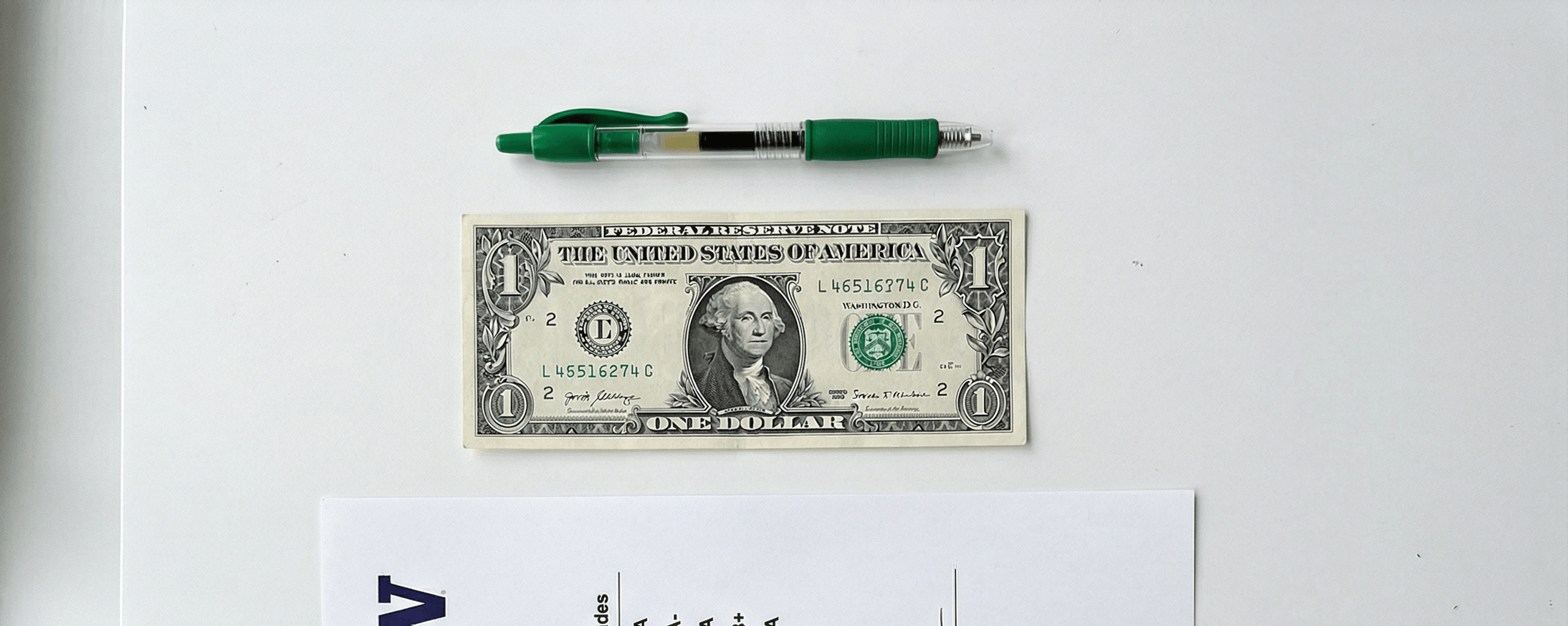
What a Grade 53 Note Looks Like
A Grade 53 About Uncirculated note is one of the more nuanced grades on the scale. From across a table, it can look nearly indistinguishable from a 55 — strong paper, vivid color, full margins, and sharp design detail throughout. The difference is in the folds. Two hard vertical folds, or a single pronounced horizontal fold, are the defining feature. The folds are more set than what a 55 shows, but they haven't disrupted the note to the extent typical on a 50.
The paper at 53 retains clear body and stiffness. This is not a tired note. The crispness is real, just tempered by the creases. Surfaces are generally clean, corners hold their shape or show only light rounding, and the overall presentation is attractive. Many collectors find a 53 a particularly satisfying result: it is unmistakably AU in every respect except those two precise, hard fold lines.
It is worth noting that a 53 can also result from a note whose folds have been pressed — the physical fold count or severity might suggest a 55, but if a third-party grader determines the note was altered to diminish fold appearance, it will not qualify for EPQ and the grade will reflect the underlying fold evidence rather than the pressed appearance.
A 53 is defined by two hard vertical folds — or a single heavier horizontal fold — that are too pronounced for a 55 but not as severe as what lands a note at 50. Every other aspect of the note is AU quality: strong paper, sharp design, clean surfaces.
Grading Criteria Breakdown
The 53 grade lives between two clear reference points. A 55 typically shows one fold or two to three light corner folds through the design. A 50 shows two heavier folds with significant handling. At 53, the folds are hard but the handling is not as excessive as a 50 — the note is cleaner overall, just creased more firmly than a 55 will tolerate.
An EPQ 53 is a note where the folds are original and the paper has not been physically or chemically treated. Because 53 is commonly associated with pressed notes — where a 50 or 55 has been flattened — a genuine EPQ 53 carries a meaningful premium in the market and is more sought after than the same grade without the EPQ designation.
How About Uncirculated 53 Affects Value
Grade 53 occupies an interesting position in the market. It is firmly in the AU range, which means collectors who want "near-new" quality will actively seek it. Yet it sits below the AU 55 and 58 grades that command the highest AU premiums for most issues. The result is that a 53 can be a genuine value find: the paper quality and visual presentation are often comparable to a 55, but the price typically reflects the harder folds.
For rare notes where even an AU 53 example is difficult to find, the grade carries full weight. For common type notes, the 53–55 spread is modest and collectors often prefer to stretch to a 55. Either way, a 53 is a legitimate and attractive collectible grade — not a consolation prize.
Grade 53 vs. Nearby Grades: What's the Real Difference?
The clearest comparison is between 53 and 55. A 55 note shows one fold or two to three light corner folds — the folds are lighter and fewer. At 53 the folds are harder and more set, even if the fold count is the same. Below a 53, the 50 grade brings in significantly more handling or a heavier fold combination. The 53 is narrowly defined by fold hardness rather than fold count.
| Grade | Name | How It Compares to 53 | Collector Feel |
|---|---|---|---|
| 45 | Ch. Extremely Fine | Two to three moderate storage folds — lighter and more numerous. Strong paper but clearly below the AU threshold. | Top of XF range |
| 50 | About Uncirculated | Two heavier folds or a horizontal + vertical combination with more handling. Folds are heavier than a 53. | Entry AU |
| 53 | About Uncirculated (this grade) | Two hard vertical folds or a single horizontal fold. Folds are too heavy for 55 but without the combination or handling typical of 50. | Mid AU |
| 55 | About Uncirculated | One fold or two to three light corner folds. Lighter fold evidence, cleaner presentation. A meaningful step up from 53. | Strong AU |
| 58 | Ch. About Uncirculated | A single vertical fold or one to two light corner folds. Just one fold separates the note from uncirculated territory. | Near-new AU |
The practical takeaway: a 53 is a solid, recognizable AU grade with strong paper and attractive eye appeal. The two hard folds are its defining characteristic — and everything else about the note tells a near-new story.