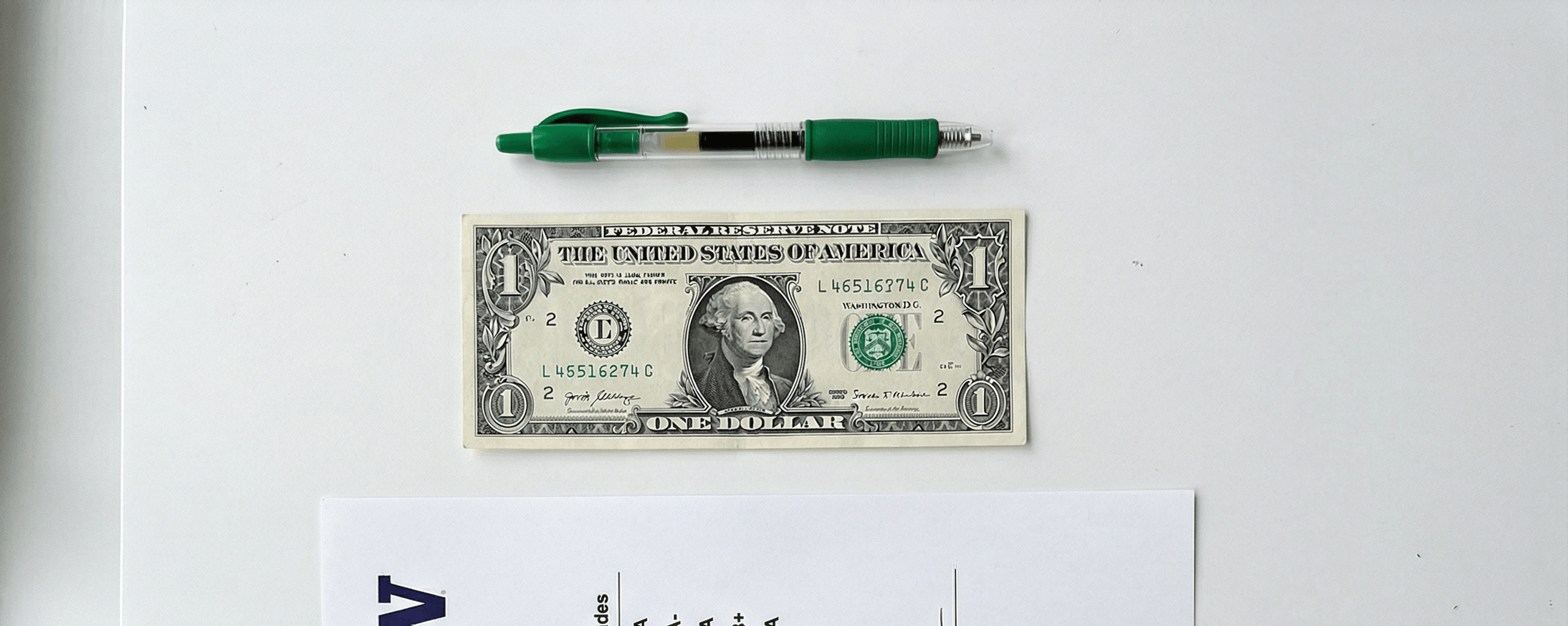
What a Grade 10 Note Looks Like
A Grade 10 note is still heavily circulated and plainly worn, but it usually presents as a stronger whole note than an 8. The paper has lost its original crispness and may still feel soft, yet the note often shows a bit more body, better balance, and a more complete overall look.
Wear is still obvious at this level. Corners remain rounded, folds are numerous, and the note may show small splits or edge roughness. Even so, a 10 often feels less fragile and a little more satisfying in hand than an 8. It is still nowhere near a mid-grade note, but it begins to look more like a solid low-grade collectible than a battered survivor.
A 10 is a "solid low-grade" note. It still shows heavy circulation, but it usually presents as a stronger and more complete piece than an 8, with slightly better structure and collector confidence.
Grading Criteria Breakdown
In the Very Good range, graders still are not looking for sharp corners or crisp paper. At a 10, the focus is on whether the note holds together as a stronger whole: heavy circulation is acceptable, but the note should feel a bit more complete, balanced, and presentable than the lower end of Very Good.
This is also the range where collectors need to separate honest heavy circulation from true problem-note territory. A note can be worn enough for Very Good 10 and still be perfectly collectible. But once repairs, missing pieces, severe restoration, or major impairments enter the picture, the holder may tell a much more complicated story.
How a Grade 10 Affects Value
Grade 10 is still far from premium condition, but it often represents a meaningful step up from the rougher end of low grade. For common notes, value may still remain fairly modest because nicer examples exist. For scarcer notes, though, a Very Good 10 can be very appealing because it offers affordability while usually looking more complete and dependable than an 8.
Important caveat: rarity still rules. A common small-size note in Very Good 10 may still be inexpensive. A rare obsolete, colonial, or early large-size issue in Very Good 10 may still command serious money. The grade helps define condition, but scarcity and demand still determine whether collectors will compete for it.
In other words, Very Good 10 often feels like the point where a low-grade note becomes easier for many collectors to live with. It is still clearly circulated, but it can offer a stronger overall presentation than an 8 without forcing the buyer too far up the price ladder.
Grade 10 vs. Nearby Grades: What's the Real Difference?
The real distinction around Grade 10 is structure. An 8 often looks rougher and a little less stable. A 12 is still circulated, but it begins to move into Fine territory with stronger body and fewer low-grade distractions. A 10 sits in between: heavily worn, clearly circulated, but usually solid enough to feel like a dependable collector example.
| Grade | Name | Difference from 10 | Collector feel |
|---|---|---|---|
| 8 | Very Good | Usually a little rougher and less complete overall, with a weaker presentation than a 10. | Rough but whole |
| 10 | Very Good (this grade) | Heavily circulated and still low grade, but usually stronger, more balanced, and more complete than an 8. | Solid low-grade |
| 12 | Fine | Still circulated, but with stronger paper body, better eye appeal, and fewer distractions than a 10. | Entry mid-grade |
| 15 | Fine | A clearer step up in collector quality, with stronger paper presence and less of the rough low-grade feel. | Better collector grade |
The practical takeaway: a Grade 10 note is still a low collector grade, but it often feels like a more comfortable ownership point than an 8. For tougher notes, a straight Very Good 10 can be an honest and desirable example because it balances affordability with a stronger, more complete presentation.