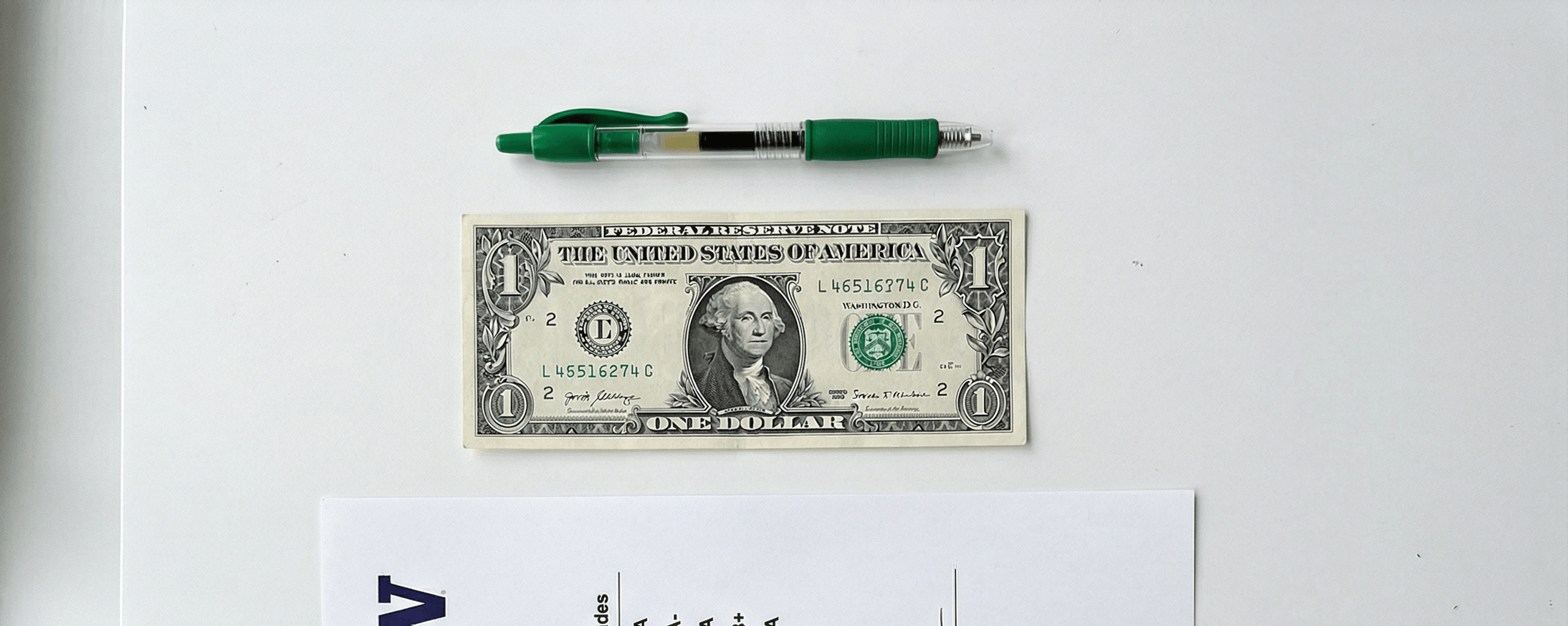
What a Grade 45 Note Looks Like
A Choice Extremely Fine 45 note is one of the most attractive grades in the circulated range. At first glance it can look nearly uncirculated — the paper has real body, the colors are strong, and the design detail is crisp and clear throughout. The giveaway is the folds. Two or three moderate vertical folds cross the face, and one of them may be horizontal. These are often called "storage folds" — the kind of creases a note picks up from being kept in a wallet or drawer rather than from heavy daily use at a cash register.
The paper at this grade has not broken down. There is still genuine stiffness and snap in the note. Corners are typically sharp or only lightly rounded. Margins are full, surfaces are clean, and embossing — the raised intaglio printing on quality notes — is still largely intact. The folds are visible but not distracting. Held at arm's length, many 45s look Better than they grade.
This is an honest, desirable mid-to-upper collector grade. It represents a note that circulated very briefly — possibly only a handful of times — before being saved. The folds alone prevent it from reaching the About Uncirculated range, but everything else about the note says "cared for."
A 45 is a "light storage folds" grade. The note is essentially sound and attractive, with two to three moderate folds being the primary — and usually only — reason it isn't grading AU. Strong paper body and great eye appeal make this one of the most popular circulated grades.
Grading Criteria Breakdown
At the Choice XF level, graders are checking that the overall package holds up: the folds are present but not severe, the paper has retained its integrity, and nothing else has degraded the note. The number of folds and their weight are the main variables that separate a 45 from a 40 below it.
EPQ (Exceptional Paper Quality) notes at this level are particularly desirable. An EPQ 45 is one that has not been pressed, re-embossed, or chemically treated — the folds you see are original, and the paper is exactly as it left circulation. Non-EPQ 45s are often the result of a note that has been pressed to reduce the appearance of folds, which graders account for in their assessment.
How Choice XF 45 Affects Value
Grade 45 sits in a sweet spot for collectors. It is high enough to be genuinely attractive — you can display and enjoy a 45 without apology — but it is below the AU range where prices begin to climb steeply. For common series, a 45 is an affordable way to own a sharp, presentable example. For scarce types, a 45 can be a meaningful find that combines visual quality with relative affordability.
The jump from 45 to 50 (About Uncirculated) is one of the more significant price steps on the scale for many series, because AU notes are perceived as "almost new." If the budget allows, pushing to a 50 or 53 is worthwhile — but a clean 45 EPQ is never a disappointing result.
Grade 45 vs. Nearby Grades: What's the Real Difference?
The key question at this level is always fold count and fold weight. A 40 has three or more folds, at least one of which tends to be heavier or more disruptive. A 45 has the same general character but fewer folds, or lighter ones, giving it better overall eye appeal and more paper integrity. Above a 45, the 50 grade is where folds become fewer still — typically two heavier ones — and the note starts to look genuinely AU.
| Grade | Name | How It Compares to 45 | Collector Feel |
|---|---|---|---|
| 35 | Choice Very Fine | More folds — typically four to seven light ones. Paper body is noticeably reduced. Still attractive but clearly more circulated than a 45. | Popular mid-grade |
| 40 | Extremely Fine | Three or more folds, one often heavier. Strong note overall but fold density is higher than a 45. Eye appeal is slightly lower. | Solid upper circulated |
| 45 | Ch. Extremely Fine (this grade) | Two to three moderate folds, strong paper body, great eye appeal. Top of the XF range. Folds are the primary reason it isn't AU. | Attractive & popular |
| 50 | About Uncirculated | Two heavier folds or a light horizontal and vertical. Paper body is stronger and eye appeal is closer to new. A meaningful step up. | Near-new appearance |
| 53 | About Uncirculated | Two hard vertical folds or a single horizontal fold. Nearly the same strong body as a 55 but with slightly more fold evidence. | Strong AU entry |
The practical takeaway: a Grade 45 is one of the most satisfying grades to collect. It is the peak of the XF range — attractive, sound, and affordable — and it gives collectors a note they can genuinely display and enjoy without stretching to AU prices.