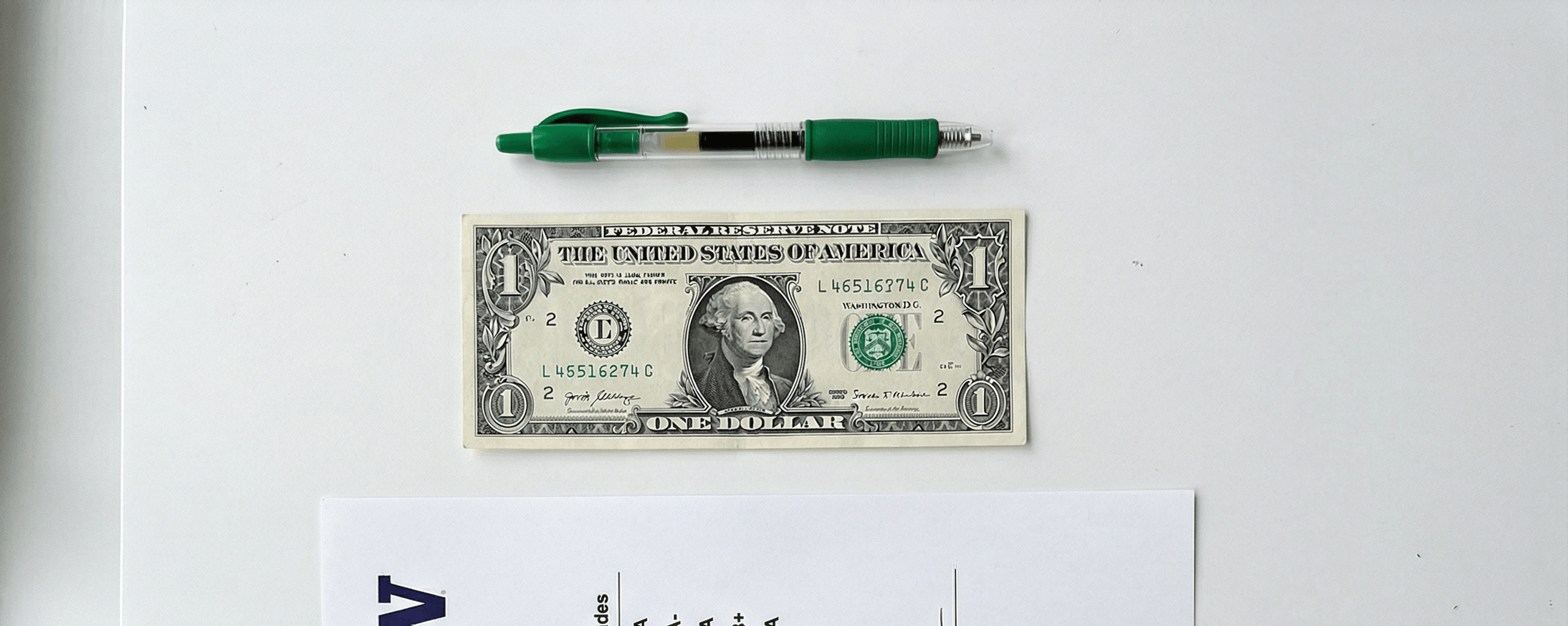
What a Grade 40 Note Looks Like
A Grade 40 note marks the entry into the Extremely Fine range. That matters because the note should now feel clearly better than even the strongest Very Fine examples. It is still circulated, but only lightly. In collector terms, this is where a note begins to look advanced rather than simply premium for the circulated category.
In hand, a 40 should still have pleasing body, decent crispness, and a cleaner overall look than a 35. Folds may be present, but they should be limited and should not overpower the note. The paper should still feel alive, not limp, and the overall impression should be that the note was used carefully rather than heavily passed around.
A 40 is a lightly circulated note with only a few folds, stronger paper presence, and a noticeably cleaner, more advanced look than Choice Very Fine.
Grading Criteria Breakdown
At Extremely Fine 40, graders are looking for light circulation rather than moderate circulation. The note can show honest use, but the wear should be limited, the body should remain strong, and the surfaces should stay attractive. This is a circulated note that still preserves much of its original quality.
Notes in this range can qualify for EPQ if the paper remains fully original and free of restoration or impairments. At 40, originality matters a great deal because collectors expect a note that still feels close to its original state despite light circulation.
How a Grade 40 Affects Value
Grade 40 often represents an important value jump because it is the first step into the Extremely Fine category. Many collectors specifically target this level because it offers a note that still feels sharp and appealing without crossing into the higher prices attached to Choice Extremely Fine, About Uncirculated, or full Uncirculated examples.
Important caveat: these bars show relative market position, not fixed price levels. A scarce issue can still command strong money at 40, while a common note may remain attainable. Grade is important, but rarity, demand, originality, centering, and overall eye appeal still drive real-world value.
In many series, an XF 40 is a sweet spot. It looks appreciably sharper than the Very Fine range, but it can still cost much less than AU or Uncirculated pieces. That makes it attractive to collectors who want a note that feels advanced without paying for the last increments of preservation.
Grade 40 vs. Nearby Grades: What's the Real Difference?
The real difference with Grade 40 is that the note now crosses out of premium circulated territory and into lightly circulated territory. A 35 can be attractive and premium for Very Fine, but a 40 should feel distinctly cleaner and closer to original. A 45 pushes that even further with fewer signs of use and a more refined overall presentation.
| Grade | Name | Difference from 40 | Collector feel |
|---|---|---|---|
| 35 | Choice Very Fine | Still premium circulated, but with a bit more evidence of use and less of the lightly circulated feel that defines XF. | Premium VF |
| 40 | Extremely Fine (this grade) | The first XF step, with only light circulation, a few folds, stronger body, and a noticeably cleaner overall presentation. | Entry XF |
| 45 | Choice Extremely Fine | Usually looks a bit stronger, a bit cleaner, and closer to About Uncirculated than the entry XF level. | Premium XF |
| 50 | About Uncirculated | Shows only minor handling or a single light fold and begins to approach the look of an Uncirculated note. | Near-new look |
The practical takeaway: Extremely Fine 40 is where a note begins to feel truly lightly circulated. It still has honest use, but the paper body, limited folds, and stronger eye appeal separate it from the Very Fine band below.