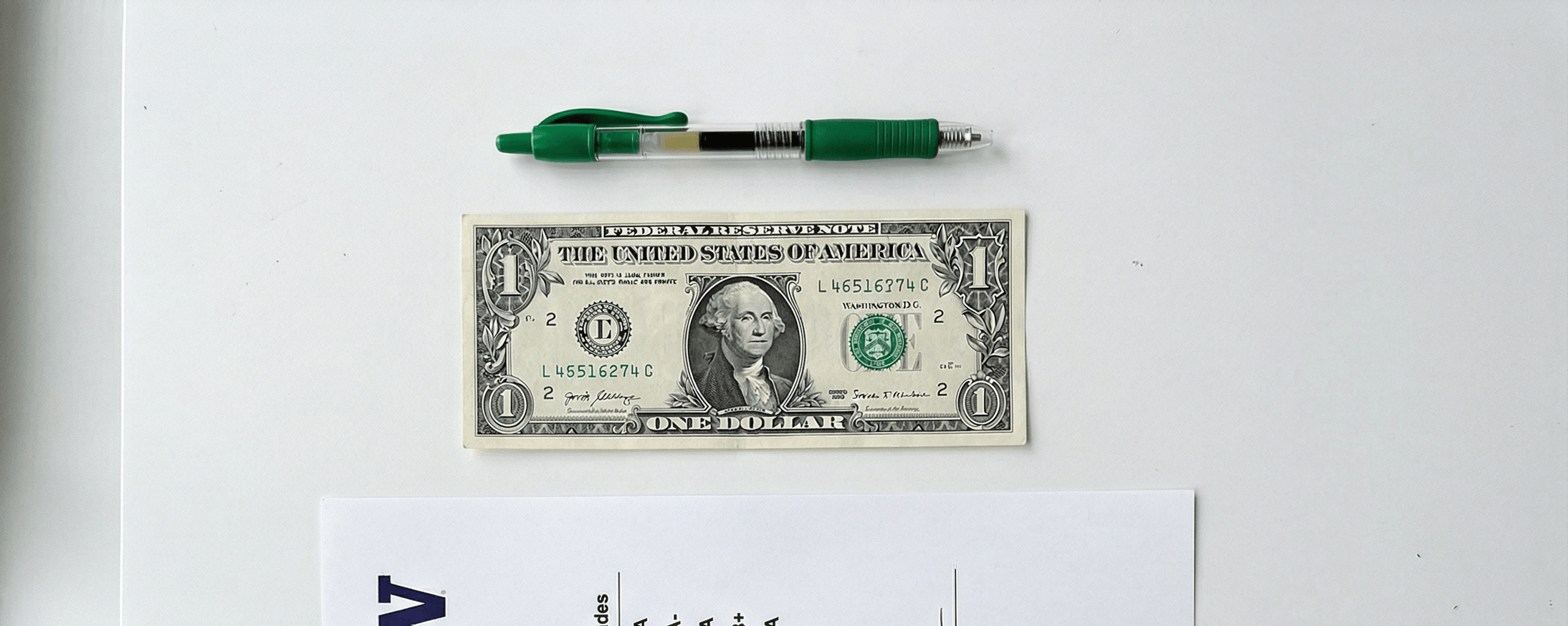
What a Grade 64 Note Looks Like
A Choice Uncirculated 64 is a fully uncirculated note with solid eye appeal — no folds, no creases, original paper body, and corners that are sharp and intact. In hand, it looks like a quality example that has been well preserved. Color is good to strong, printing is clear, and there is no evidence of circulation handling of any kind.
What separates a 64 from a 65 Gem is the accumulation of minor imperfections that, taken together, prevent the note from achieving Gem-level eye appeal. This might be a more readily visible counting flick on one surface — not severe, but noticeable without magnification. It could be centering that is clearly off in one direction, leaving an uneven margin that stands out. Or it might be a combination of two small factors — a light surface mark and slightly soft paper feel — that individually would be borderline but together tip the scale. No single flaw is dramatic. The 64 simply has one more minor imperfection than a 65 allows, or the same imperfections expressed slightly more noticeably.
A 64 is a legitimate, fully uncirculated note that belongs in any working collection. It sits just below the Gem threshold — not because anything is wrong with it, but because the bar for "Gem" is genuinely high. For budget-conscious collectors or those building across a wide series, a 64 is often the smartest acquisition at the uncirculated level.
Grading Criteria Breakdown
Graders evaluate three primary factors when assigning a grade in the 63–70 range. At Grade 64, here's where a note typically lands on each:
One important nuance at the 64 level: unlike the grades above it, where a single specific detail often explains the grade, a 64 can result from several different combinations of minor factors. A note with excellent centering and bold color can grade 64 because of a somewhat more visible surface mark. A note with immaculate surfaces can grade 64 because its centering is noticeably off. The grade reflects the aggregate — the sum of the note's presentation — rather than any one definitive flaw. This is part of what makes 64 the most nuanced grade to evaluate and the hardest to predict before submission.
How a Grade 64 Affects Value
The 64 occupies a practical, accessible tier in the market. Notes grading 64 trade regularly at auction and through dealers, and prices are generally well-established for most series. The gap in price between a 63 and a 64 is modest — typically 10 to 20 percent — while the gap between a 64 and a 65 Gem can be more pronounced, especially for series where condition-conscious collectors are active.
Important caveat: These are relative multiples, not absolute prices. A common series note in 64 might sell for $20–$40. A scarce or popular series note in 64 might bring considerably more. The grade multiplies whatever inherent value the note carries — series, date, denomination, and signature variety all matter. Always check the PMG population report and recent auction results for your specific note before drawing conclusions.
One dynamic worth understanding: for collectors who submit their own notes, the 64-to-65 boundary is where resubmission decisions get complicated. A strong 64 — one that looks like it might have crossed the line — is sometimes worth resubmitting, particularly for valuable notes where the price difference between grades is significant. But for common series notes, the cost of resubmission often exceeds the value gained from a one-point upgrade. Knowing which side of that calculation you're on requires checking the population report first.
Grade 64 vs. Nearby Grades: What's the Real Difference?
The 64 is the most crowded grade on the uncirculated scale — notes cluster here because it represents the realistic outcome for a large proportion of well-preserved uncirculated survivors that just missed Gem. Here's how it compares to the grades around it:
| Grade | Name | Difference from 64 | Availability |
|---|---|---|---|
| 62 | Uncirculated | Two steps below, with more apparent minor imperfections — visible surface marks, clearly off-center margins, or paper that shows more evidence of original handling. Solid uncirculated notes, but noticeably below Choice level. | Common |
| 63 | Choice Uncirculated | One step below 64, with slightly more numerous or noticeable imperfections. Still a fully uncirculated note with good eye appeal — the difference from 64 is subtle but consistent. | Common |
| 64 | Choice Unc (this grade) | The top of the Choice tier. Strong uncirculated note with minor imperfections that — in aggregate — prevent Gem designation. The most contested boundary on the uncirculated scale. | Less Common |
| 65 | Gem Uncirculated | Crosses the Gem threshold. The same types of imperfections are present, but fewer or smaller — the overall impression clears the bar for genuine Gem eye appeal. | Uncommon |
| 66+ | Gem / Superb Gem Unc | Upper Gem and Superb Gem territory. Imperfections become progressively smaller and fewer, with rapidly increasing scarcity and price premiums at each step. | Uncommon – Rare |
The most practical takeaway: a 64 is a fully respectable uncirculated note, and there is no shame in a 64 holder. The grade reflects a note that has been honestly evaluated against a genuine standard — not a note that failed, but a note that landed where it landed. For series-builders working across many dates or varieties, a consistent set of 64s is a meaningful achievement. And for those chasing upgrades, a strong 64 is exactly the kind of note worth watching for resubmission opportunities when populations are thin at 65.