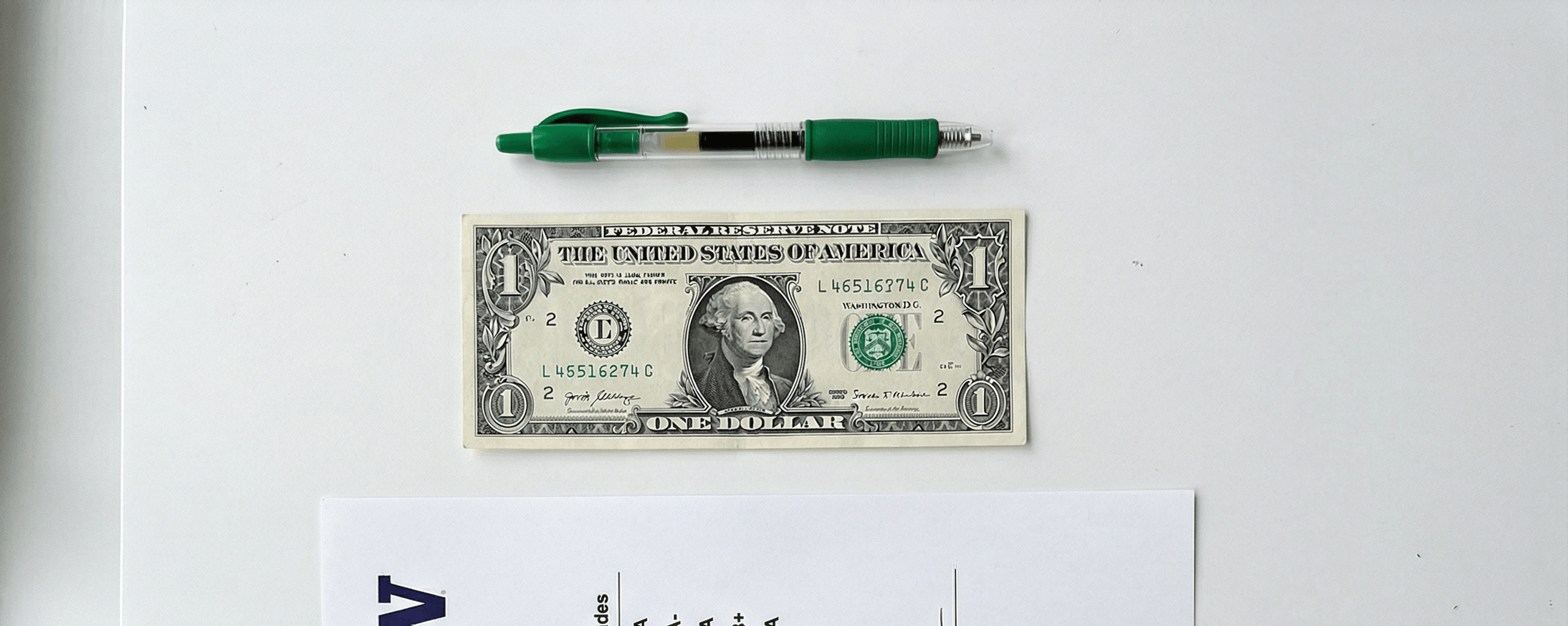
What a Grade 65 Note Looks Like
A Gem Uncirculated 65 is a note that has never circulated and presents with strong, appealing eye appeal across the board. There are no folds or creases. The paper holds its original body and crispness. Corners are sharp and intact. Color is bold and the printing is clearly rendered. Held at arm's length, a 65 looks like an exceptional note — the kind that prompts a double-take from anyone who knows what they're looking at.
The "Gem" label is not casual. It marks a real qualitative threshold on the PMG scale — the point where a note's condition stops being merely good and starts being impressive. Below 65, notes grade as Choice Uncirculated (63–64), which describes notes that are uncirculated but carry more apparent minor imperfections. At 65, those imperfections are fewer and smaller. The note has what graders call strong eye appeal: everything looks right, even if close inspection under magnification reveals the small details that keep it from grading higher.
A 65 is the benchmark grade for serious uncirculated collecting. It's the floor of the Gem tier — not a consolation prize, but a meaningful standard in its own right. For many common series, a 65 is accessible enough to build with. For scarcer series, a 65 can be a significant find in its own right.
Grading Criteria Breakdown
Graders evaluate three primary factors when assigning a grade in the 63–70 range. At Grade 65, here's where a note typically lands on each:
The jump from 64 to 65 is the crossing of the Gem threshold, and it is partly a holistic judgment. A note can grade 65 with a slightly off-center margin if its surfaces are clean and its paper quality is excellent. Conversely, a note with perfect centering but a more apparent counting flick might also land at 65. Graders are assessing the complete picture — not running through a rigid checklist. This is why two 65s from the same series can look noticeably different from each other while carrying the same grade: they cleared the same overall bar by different routes.
How a Grade 65 Affects Value
A 65 is frequently used as the reference grade when collectors and dealers discuss value multiples — you'll often see higher grades expressed as a percentage above "a 65." That's not an accident. The 65 represents the most liquid point in the uncirculated market for most series: common enough to appear regularly at auction, desirable enough to command a real premium over circulated examples and lower uncirculated grades.
Important caveat: These are relative multiples, not absolute prices. A common series note in 65 might sell for $25–$60. A key date or scarce series note in 65 might bring several hundred to several thousand dollars. The grade amplifies the note's inherent value — rarity, series, date, and denomination all play a role. Always check the PMG population report and recent auction records for your specific note before forming price expectations.
For collectors focused on long-term value, the 65 is often the minimum grade worth serious attention in the uncirculated market. Notes grading below 65 — in the Choice Uncirculated range — are perfectly collectible, but they trade in a different tier and face more pricing competition from the broader market. At 65, you have entered the tier where condition itself becomes a meaningful part of the note's identity as a collectible.
Grade 65 vs. Nearby Grades: What's the Real Difference?
The 65 sits at a genuine inflection point on the scale — above the Choice Uncirculated zone, at the entry of the Gem tier. Here's how it compares to the grades immediately around it:
| Grade | Name | Difference from 65 | Availability |
|---|---|---|---|
| 63 | Choice Uncirculated | Fully uncirculated but with more apparent minor imperfections — a visible counting flick, softer paper feel, or centering that clearly falls short. Good notes, but below the Gem threshold. | Common |
| 64 | Choice Uncirculated | One step below Gem. Strong notes that nearly reach the threshold — imperfections are minor, but the overall presentation doesn't quite achieve Gem-level eye appeal. | Less Common |
| 65 | Gem Unc (this grade) | The entry point into Gem territory. Strong eye appeal across all factors, with minor imperfections that are present but don't detract from the overall impression. | Uncommon |
| 66 | Gem Uncirculated | The top of the Gem tier. A tighter, more consistent presentation than 65 — fewer or smaller imperfections, stronger centering, approaching the Superb Gem threshold. | Uncommon |
| 67+ | Superb Gem Unc | Crosses into the elite tier. Any imperfections are detectable only under magnification. The note's presentation is exceptional in every visible respect. | Scarce – Rare |
The most practical takeaway: a 65 is a genuine Gem note that belongs in any serious collection. If you're choosing between a 64 and a 65, the 65 is worth the premium — you've crossed a named threshold that matters to future buyers and reflects a real qualitative difference. If you're weighing a 65 against a 66, the question is whether the incremental quality improvement justifies the incremental price — which depends on your budget and how condition-focused your collecting goals are. For most collectors, a 65 is a satisfying, defensible acquisition at any stage of building a set.