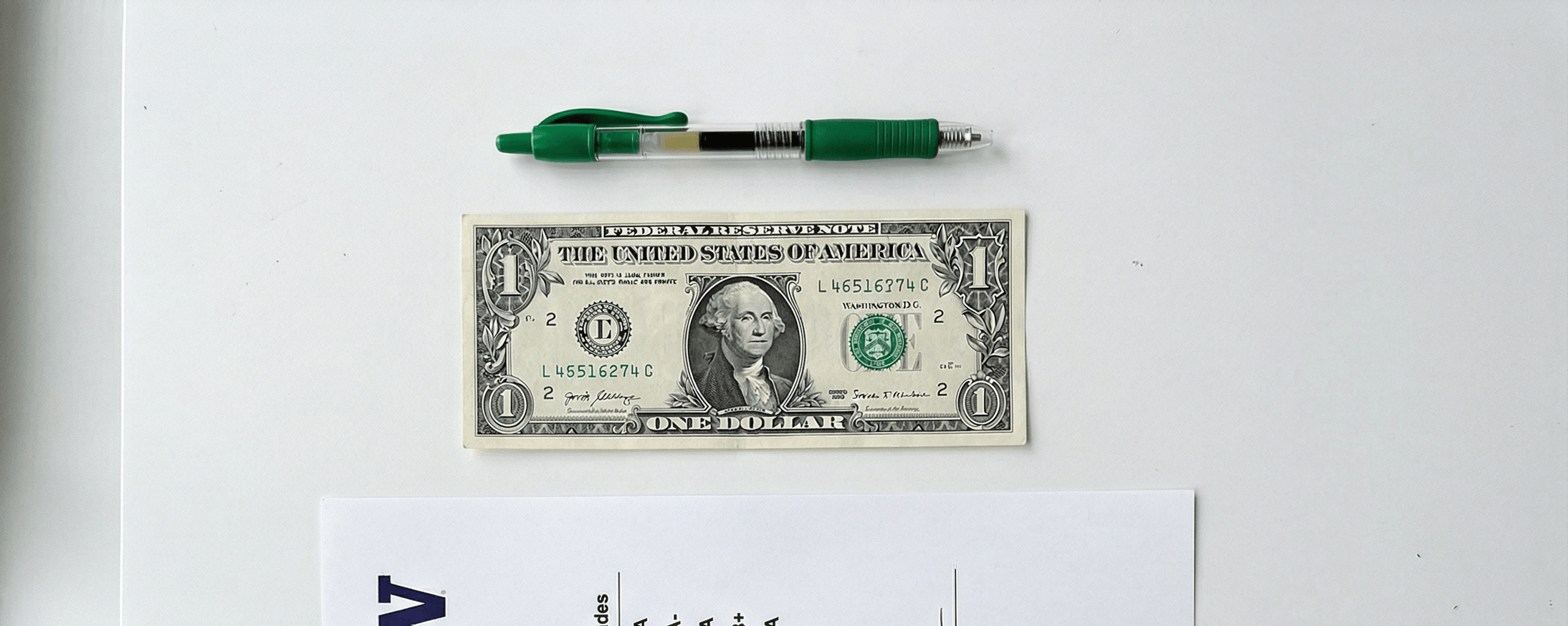
What a Grade 4 Note Looks Like
A Grade 4 note is deeply circulated and immediately looks tired in hand. The paper has lost its body, the surfaces feel limp, and the note usually shows hard use from years of passing through pockets, cash drawers, or storage conditions that were less than ideal. This is not a note with light wear — this is a note that has truly lived a life.
At this level, the damage is no longer subtle. Heavy fold lines cross the face in multiple directions. Margins are often frayed or ragged. Splits — particularly along folds — are common and can be significant. The design remains fully identifiable: you can read the denomination, make out the portrait, and confirm the type. But the eye appeal is minimal, and the note makes no attempt to hide its history.
A Good 4 is the absolute floor of the collectible scale — the lowest grade at which a note is still considered genuinely tradeable. There is no collectible grade beneath it. A note in Good 4 is still whole enough to be cataloged, studied, and collected.
A 4 is a "beaten survivor" grade. The note has endured major circulation, carries obvious faults, and shows its age in every corner — but it retains enough structure and legibility to be identified, graded, and collected.
Grading Criteria Breakdown
In the Good range, graders are not searching for sharp corners or strong embossing anymore. They're asking a simpler question: how much original note is still there, and how severe is the wear? For a 4, the answer is: most of the note is present, but just barely — and the wear is severe throughout.
This is also the range where collectors need to separate normal low-grade wear from problem-note issues. A note can be worn enough for Good 4 and still be collectible. But once repairs, tape, grafted paper, significant restoration, or chemically altered surfaces appear, the holder will reflect that — often with a "details" designation that changes the note's collectibility and value significantly.
Honest wear, no matter how severe, is not a problem. It is simply grade. Artificial intervention is the line that separates a straight Good 4 from a details-graded note.
How Good 4 Affects Value
Good 4 is not a condition collectors buy for beauty. It is a condition collectors buy for access. For common, widely available series — small-size Federal Reserve notes, common large-size types — a Good 4 is simply a budget example. Nicer grades are plentiful, so the 4 offers little beyond a low entry price.
For scarce notes, however, Good 4 changes character entirely. Obsolete bank notes, colonial issues, territorial currency, and early large-size rarities are sometimes found only at low grades. A Good 4 that is straight-graded — no repairs or restoration — may be the most affordable legitimate example of a type that simply does not survive in Fine or better.
Important caveat — rarity still rules. A common small-size note in Good 4 may sell for a few dollars. A rare obsolete, colonial, or early large-size issue in Good 4 may still command serious money. The grade defines condition, but scarcity and demand determine whether collectors will compete for it.
In other words, Good 4 is often the collector's entry point. It is where affordability starts to open up on notes that are otherwise out of reach in Fine, Very Fine, or better. That makes this grade more important than many new collectors realize.
Grade 4 vs. Nearby Grades: What's the Real Difference?
The real distinction around Grade 4 is how far the wear has gone. A 4 often looks beaten down and visually impaired — it is the most heavily worn note that still grades collectible. A 6 is still very rough, but usually hangs together marginally better. Above that, grades 8 and 10 bring progressively more structure and stability.
| Grade | Name | How It Compares to Good 4 | Collector Feel |
|---|---|---|---|
| 4 | Good (this grade) | The absolute floor of collectible grading. Fully worn and limp, heavy folds, frayed edges, likely splits. Design fully identifiable but heavily abraded. | Bottom collectible tier |
| 6 | Good | Still heavily worn, but hangs together a little better than a 4. Splits may be shorter, edges slightly less ragged. A marginal step up in eye appeal. | Affordable survivor |
| 8 | Very Good | Still heavily circulated and limp, but more intact overall. Less severe splits, generally cleaner surfaces, and more stability. A meaningful step above Good. | Rough but steadier |
| 10 | Very Good | A whole, structurally sound note with heavy circulation. Still weak and folded, but clearly a different tier — more paper body, better surface, more appealing in hand. | Solid low-grade |
The practical takeaway: a Good 4 is not a disaster grade. It is the floor of legitimate collecting on our scale. For the right note — a scarce type, an affordable entry into a tough series, or an honest example while you search for better — a straight Good 4 is a respectable result.