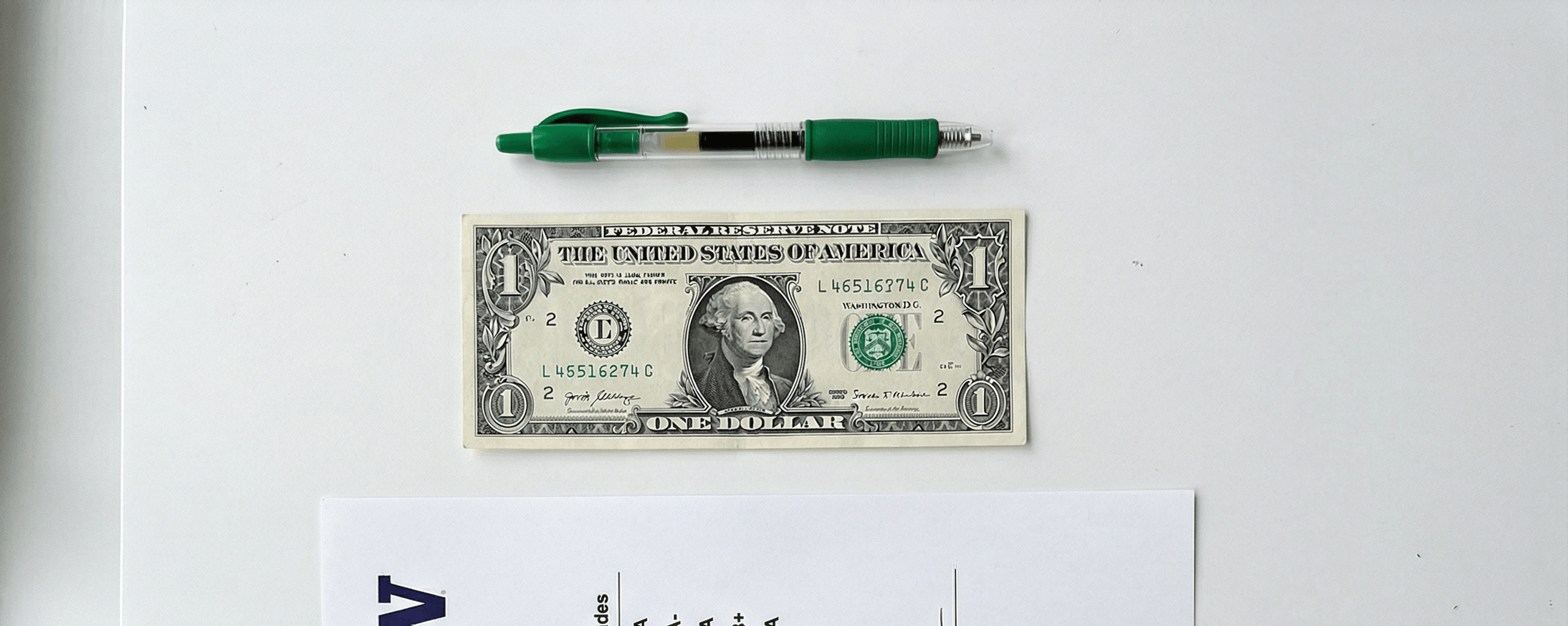
What a Grade 70 Note Looks Like
A Perfect Uncirculated 70 is the absolute ceiling of paper money grading. When a grader assigns a 70, they are certifying that no flaw — no matter how small, no matter what tools or lighting conditions are used — can be detected anywhere on the note. The paper is immaculate: full original body, perfect centering, flawless corners, bold and evenly distributed ink, and surfaces completely free of any mark, fiber disturbance, or trace of handling from the time of printing to the time of submission.
A 70 is not just "a great note." It is a note that survived decades — sometimes a century or more — in a condition that defies the normal entropy of the physical world. The vast majority of notes never come close. Even notes pulled directly from original government bundles frequently grade in the 63–67 range due to counting marks, minor misregistration, or handling at the point of issue.
A grade 70 is as rare as grading gets. For most series, the PMG population report shows zero or a single example at this level — if one exists at all. If you're holding a 70, you are holding the finest known example of that note in the world.
Grading Criteria Breakdown
Graders evaluate three primary factors when assigning a grade in the 65–70 range. At Grade 70, the standard for each is absolute — there is no allowance for any imperfection:
At the 70 level, graders also confirm that the note shows zero evidence of pressing, cleaning, chemical treatment, or artificial improvement of any kind. A genuine 70 has never been interfered with — it survived on its own merits, through storage alone, in the exact condition it left the printing facility. Any alteration, however skillfully done, will disqualify a note from the Perfect grade and may result in a net grade or details designation instead.
How a Grade 70 Affects Value
The value of a grade 70 does not follow a linear scale — it operates in a different tier entirely. When a 70 exists for a given series, it is often the only one in the world at that level. The market for such a note is driven not by typical collector demand but by competition between serious registry set builders and investors who want the undisputed finest known example.
Important caveat: At the 70 level, standard price multiples break down. The sale price of a 70 is set by whoever wants it most on the day it comes to market — not by a formula derived from lower grades. A common series note in 70 might trade at 5–20× the value of a 65. A key date note in 70 — especially one where it is the sole example — can reach prices with no meaningful ceiling. Always consult the PMG population report and recent auction results for your specific note before drawing any conclusions.
It is also worth noting that for many series, a grade 70 simply does not exist in the population report. No example has ever been certified at that level. In those cases, a 69 effectively functions as the finest known, and the 70 remains a theoretical maximum rather than a real-world reference point.
Grade 70 vs. Nearby Grades: What's the Real Difference?
By the time you're comparing 70 to 69, the differences are beyond what any collector can see with their eyes. Here's how the full top tier of the scale stacks up:
| Grade | Name | Difference from 70 | Rarity |
|---|---|---|---|
| 66 | Gem Uncirculated | May show a light counting flick or slightly off-center margins. Still an impressive note, and the top of what most collectors realistically accumulate. | Uncommon |
| 67 | Superb Gem Unc | One minor imperfection — a faint surface mark or trace of misregistration — keeps it just outside the very highest tier. | Scarce |
| 68 | Superb Gem Unc | Essentially perfect to the naked eye. One microscopic flaw detectable only under magnification separates it from the top two grades. | Very Scarce |
| 69 | Superb Gem Unc | Virtually flawless. Only the most infinitesimal technical imperfection — detectable only under extreme magnification — prevents a perfect score. | Rare |
| 70 | Perfect Unc (this grade) | No detectable flaw under any conditions, any magnification, any lighting. The absolute ceiling of the grading scale. | Extremely Rare |
The most important thing to understand about a grade 70: perfection is not just a matter of degree — it is a categorical statement by the grading service. It is certifying that this note has no flaw they can find. That is a remarkable claim and one they make very sparingly. For most collectors, a grade 68 or 69 represents the realistic ceiling of what they will ever own. A 70 is a different kind of object altogether — part collectible, part historical artifact, and part trophy.