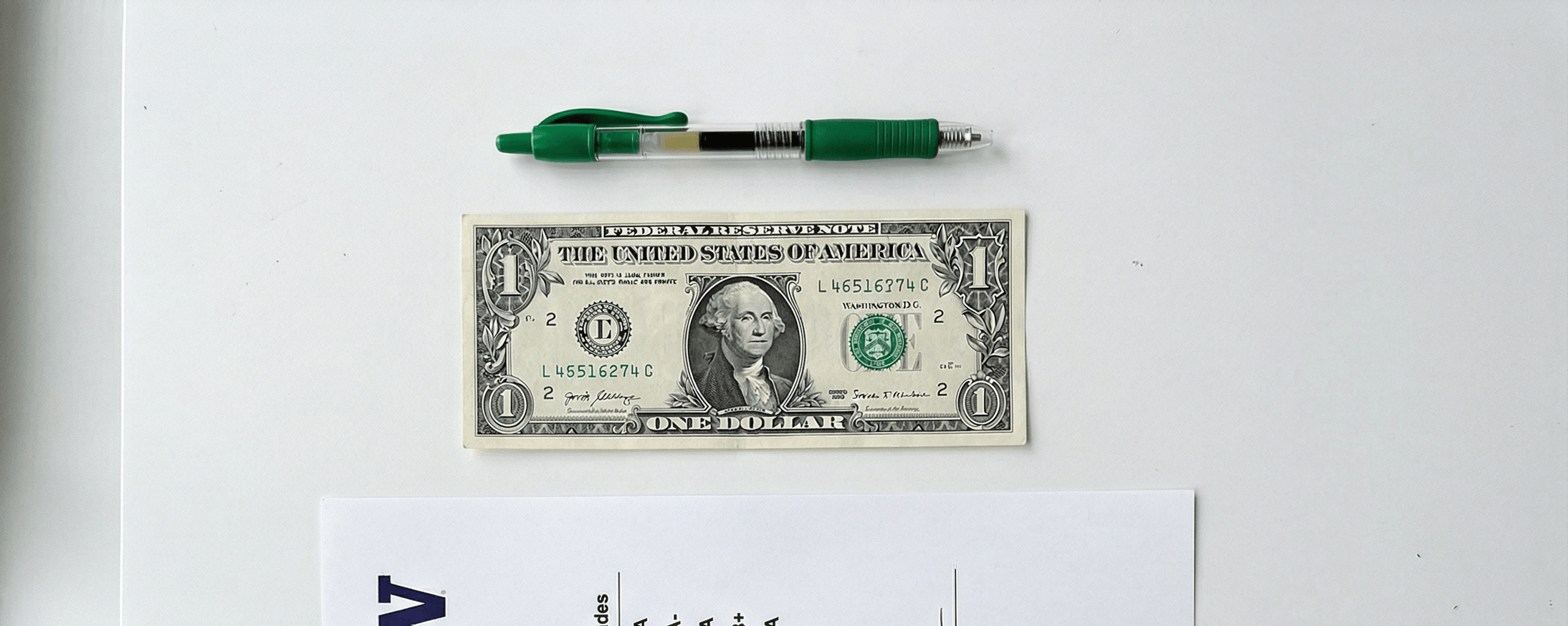
What a Grade 69 Note Looks Like
A Superb Gem Uncirculated 69 is, for all practical purposes, a flawless note. When a grader holds a 69, they are looking at a note that has never touched circulation — no folds, no creases, no handling wear of any kind. The paper is crisp and full-bodied, corners are perfectly sharp, centering is exceptional, and the print quality is as strong as the day it left the Bureau of Engraving and Printing.
What keeps a 69 from reaching a perfect 70 is typically something only detectable under magnification or raking light: a microscopic fiber disturbance, the faintest trace of a counting mark visible only under 10× magnification, or an imperceptible variance in ink density in one corner. To any collector — even experienced ones — a 69 and a 70 are functionally indistinguishable to the naked eye. The difference exists only at the technical edge of what graders can detect.
A 69 is a virtually perfect note. If you're holding one, you are in the top fraction of a percent of all surviving examples for virtually any series. The gap between a 69 and a 70 is largely academic — but for registry set competitors, that single point can represent a meaningful price difference.
Grading Criteria Breakdown
Graders evaluate three primary factors when assigning a grade in the 65–70 range. At Grade 69, here's where a note typically lands on each:
Beyond the "big three," graders also examine surface marks under magnification and raking light, looking for the faintest counting flick, fiber disturbance, or trace of printer handling. At 69, any such mark must be genuinely microscopic — detectable only under magnification, invisible to the naked eye. The note must also show no evidence of pressing, cleaning, or artificial enhancement. A genuine 69 is untouched from the moment of printing.
How a Grade 69 Affects Value
The value jump from a 68 to a 69 is significant and driven almost entirely by scarcity. Notes that survive in uncirculated condition typically concentrate in the 63–66 range. The population of notes grading 69 for any given series is often measured in single digits — sometimes in ones and twos. When a 69 comes to market, it frequently attracts competitive bidding from registry set collectors who need the top-pop example for their set.
Important caveat: These are relative multiples, not absolute prices. A common series note in 69 might sell for a few hundred dollars. A key date or rare series note in 69 can reach five figures or beyond. The grade amplifies whatever inherent value the note already carries — it does not create value from nothing. Always consult the PMG population report for your specific series to understand how many examples exist at 69 before drawing conclusions about value.
For registry set collectors — those competing to own the finest-known example of every note in a given series — a 69 is often the ultimate attainable goal. A 70 may simply not exist for many series, making the 69 the de facto top of the registry. In those cases, the premium a 69 commands can be extraordinary.
Grade 69 vs. Nearby Grades: What's the Real Difference?
In the Superb Gem zone (67–70), grade differences become almost philosophical. Here's how to think about each grade relative to 69:
| Grade | Name | Difference from 69 | Rarity |
|---|---|---|---|
| 66 | Gem Uncirculated | May show a light counting flick or slightly off-center margins. Still an impressive note with strong eye appeal. | Uncommon |
| 67 | Superb Gem Unc | One minor imperfection — a faint surface mark or a trace of misregistration — keeps it just outside the highest tier. | Scarce |
| 68 | Superb Gem Unc | Essentially perfect to the naked eye. One microscopic flaw detectable only under magnification separates it from 69. | Very Scarce |
| 69 | Superb Gem Unc (this grade) | Virtually flawless under any examination. Only the most microscopic technical imperfection prevents a perfect 70. | Rare |
| 70 | Perfect | No detectable flaws under any conditions or magnification. Fewer than a handful exist for most series. | Extremely Rare |
The most practical takeaway: if your note grades 69, you are holding something exceptional by any measure. For most series, a 69 represents the finest realistic example a collector will ever encounter. The jump to 70 is largely theoretical for most issues — and even if a 70 exists, the 69 remains an elite trophy in its own right.