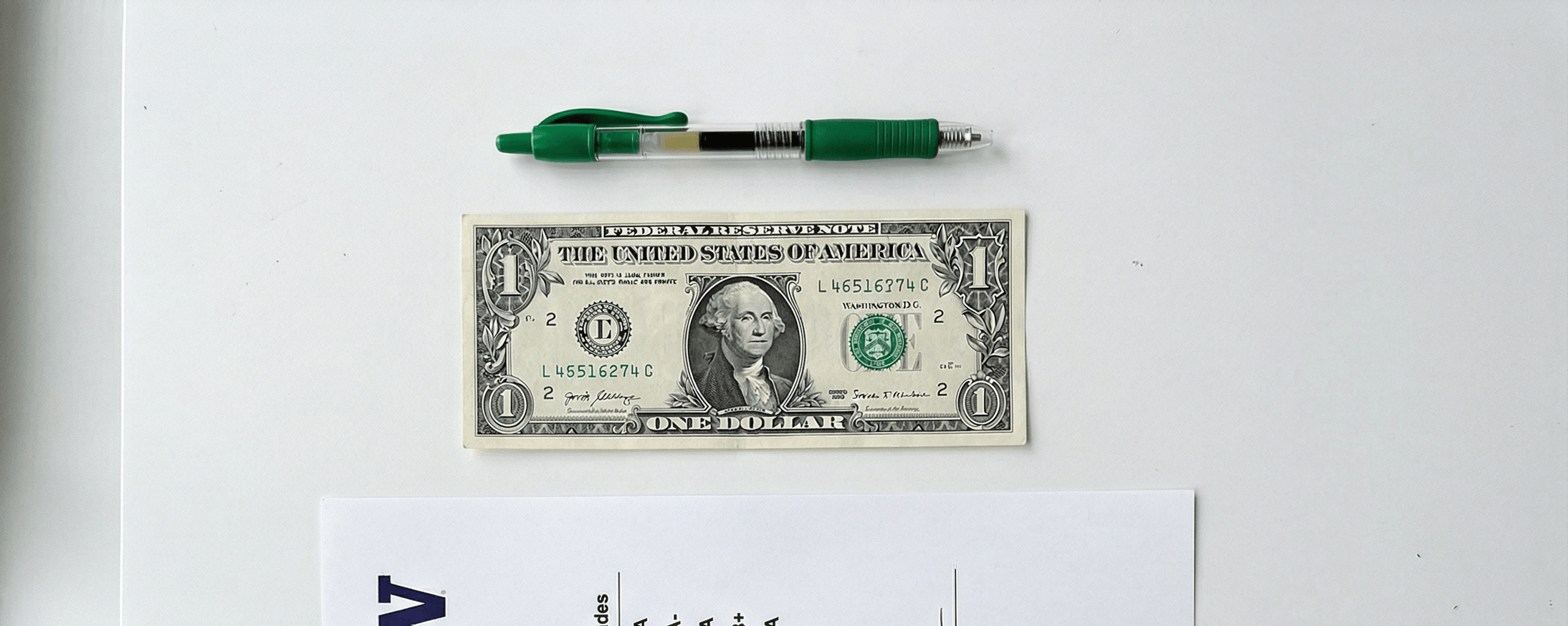
What a Grade 66 Note Looks Like
A Gem Uncirculated 66 is a genuinely beautiful note — fully uncirculated, with strong eye appeal and no evidence of circulation whatsoever. There are no folds, no creases, and no handling wear. The paper retains its original body and crispness. Corners are sharp. Color is bold. To virtually any collector looking at it in hand, a 66 is an outstanding example of its type.
What keeps a 66 from crossing into Superb Gem territory at 67 is typically one or two minor imperfections that a grader can see without magnification, but which do not meaningfully detract from the note's visual appeal. The most common culprits: a single light counting flick from the original bank bundle, centering that is good but not quite exceptional — perhaps the design sits a few millimeters closer to one border — or a barely perceptible handling impression on one surface. None of these are defects in the traditional sense. They are simply the small realities of a note that survived in excellent condition but not in perfect condition.
A 66 is the finest grade most collectors will regularly encounter in the market for common to moderately scarce series. It is the sweet spot between availability and quality — high enough to command real premium over a 65, accessible enough that examples still trade with reasonable frequency. For many collectors, a 66 is the practical ceiling of a working collection.
A 66 sits at a unique position on the grading scale: it is genuinely elite by any objective measure, yet it appears in the market often enough to be purchased at auction or from dealers without the months-long wait that 67s and 68s can require. For collectors building quality sets on a realistic budget, a 66 frequently offers the best ratio of grade quality to price paid — and to the eye, it is nearly indistinguishable from a 67.
Grading Criteria Breakdown
Graders evaluate three primary factors when assigning a grade in the 63–70 range. At Grade 66, here's where a note typically lands on each:
The difference between a 65 and a 66 comes down to the degree and number of minor imperfections. A 65 may have a slightly more noticeable counting flick, marginally weaker centering, or a surface mark that is just a step more apparent. At 66, the overall presentation is tighter — every element is close to its best, with only one or two small details keeping it out of Superb Gem. Graders look at the complete picture: a note with perfect centering and one faint surface mark might grade 66, while a note with slightly off centering and otherwise pristine surfaces might also grade 66. The total impression matters as much as any individual element.
How a Grade 66 Affects Value
A 66 occupies a particularly interesting position in the value curve. The jump from 65 to 66 is meaningful — typically 30 to 50 percent above a 65 for the same note — but the jump from 66 to 67 is where values begin to accelerate more sharply. That inflection makes a 66 the last grade before the premium curve steepens considerably, which is part of what makes it a compelling acquisition for practical collectors.
Important caveat: These are relative multiples, not absolute prices. A common series note in 66 might sell for $40–$80. A scarce series note in 66 might command several hundred to several thousand dollars. The grade is a multiplier on the note's inherent value — not a value generator on its own. Always check the PMG population report and recent auction results for your specific note and series before drawing any price conclusions.
One dynamic worth understanding at the 66 level: because 66s appear in the market more regularly than 67s and above, price discovery is more reliable. You can look at a meaningful number of recent auction results for most series and get a genuine sense of market value. At 68 and above, sales are infrequent enough that a single outlier result can skew the picture significantly. The 66 market is, in this sense, more transparent and predictable — which has its own kind of value.
Grade 66 vs. Nearby Grades: What's the Real Difference?
The 66 sits at the top of the Gem tier, just below the Superb Gem threshold. Here's how it compares to the grades immediately around it:
| Grade | Name | Difference from 66 | Availability |
|---|---|---|---|
| 64 | Choice Uncirculated | Noticeably more imperfections — a clearer counting flick, slightly softer paper, or more apparent centering variance. Still a solid uncirculated note but clearly below Gem level. | More Common |
| 65 | Gem Uncirculated | One step below 66. May have a slightly more prominent surface mark or marginally weaker centering. The difference from 66 is subtle but consistent. | Less Common |
| 66 | Gem Unc (this grade) | The top of the Gem tier. One or two minor visible imperfections prevent entry into Superb Gem. Outstanding eye appeal and the sweet spot for value-conscious collectors. | Uncommon |
| 67 | Superb Gem Unc | The first Superb Gem grade. One minor imperfection detectable under magnification — a meaningful step up in both quality and price from 66. | Scarce |
| 68–70 | Superb Gem / Perfect | Essentially or completely flawless. Increasingly rare and commanding exponentially higher premiums as the grade rises. | Very Scarce – Extremely Rare |
The most practical takeaway: if you are comparing a 65 and a 66 for the same note, the 66 is worth the premium in almost every case — you're getting the best the Gem tier has to offer. If you are comparing a 66 and a 67, the decision becomes more personal: the 67 is a meaningfully better note, but at a meaningfully higher price. For most collectors building across a series, a consistent set of 66s represents a strong, realistic, and visually impressive goal.